Well, I'm back after a week of no computers at my grandparents' house in Philadelphia. I was there with my sister and goddaughter, which was fun--lots of baby time. When I got to Knoxville last Sunday (just in time to fly to Philadelphia Monday morning), I got to put Hana to sleep because she was crying and Kris needed to pack. It took a while, and all the Advent and Christmas songs I know, but she finally fell asleep in my arms, which was pretty cool, and I made the transfer to the crib without a problem! Also, she gave me my Christmas present early--a "year of Hana Grace" calendar, entirely handmade by "Ma" (who wisely decided not to make it a page-a-day Hana Grace calendar!). Very well done, and I will proudly post it on my wall as soon as I return to Indianapolis.
It was good to spend some time with the grandfolks too, of course. Gran is recovering from a recent illness, so we didn't get out much, but it was good for her and Pa to see a lot of energy bouncing around their house in Kris, Hana, and me. It was also helpful to live at a slower pace that I normally do.
Tasks for my week at home before I (potentially) return to South Bend for New Years include finishing some grad school applications, searching for a fun summer job (post ideas in the comments thread), and working on some languages with my little brother. As far as summer jobs go, I'm looking either for something akin to a governors' school (as an RA), or for something adventurous and outdoors. Especially if I get into a PhD program for next year, an adventure summer would be refreshing. And as for languages, my Drew decided to teach me Arabic, and I'm teaching him Latin, which I insist is a living language. For example, did you know that Finland broadcasts its news in Latin, and has a news-in-brief on its EU Presidency site? And of course, Latin is the official language of the Vatican city-state.
Praise for Latin from the Economist
Finland makes Latin the King
Conspectus rerum Latinus (News from the EU Presidency)

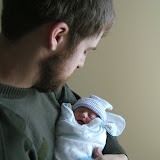
Goddaughter-elect
I got some very exciting news four o'clock yesterday afternoon--my goddaughter-elect, Natalie Grace, was born, an unexpected month early! The doctors say her vital signs are good even though she's only 4.5 pounds heavy (for comparison, I was a whopping 9 pounds, 7 ounces when I showed up a month late lo some 23 years ago). But the doctors say her vital signs are good, so they don't foresee any problems.
Conveniently, I was going Christmas shopping last night; I only ended up buying things for my godchild (Hana) and godchild-elect (Natalie), because they're the fun ones to shop for (but I'm on track and know what I need to get for everyone else). I'd write about the things I got them, because they're really cute and exciting, but I can't blog about them until after Christmas, in case they (or their parents) check blogs before then. ;)
The plan is to go visit Natalie tomorrow afternoon, and then go up again in a few weeks for the baptism. Ask my housemates, and you'll know that I'm a very proud godparent and love bragging about or showing off pictures of my little ones, so this is a very exciting time for me! (Sorry, no pictures yet; I'll try to post as soon as some arrive at my inbox).
Conveniently, I was going Christmas shopping last night; I only ended up buying things for my godchild (Hana) and godchild-elect (Natalie), because they're the fun ones to shop for (but I'm on track and know what I need to get for everyone else). I'd write about the things I got them, because they're really cute and exciting, but I can't blog about them until after Christmas, in case they (or their parents) check blogs before then. ;)
The plan is to go visit Natalie tomorrow afternoon, and then go up again in a few weeks for the baptism. Ask my housemates, and you'll know that I'm a very proud godparent and love bragging about or showing off pictures of my little ones, so this is a very exciting time for me! (Sorry, no pictures yet; I'll try to post as soon as some arrive at my inbox).
Islam, Modernity, and Us
Still not sure if anyone actually reads this thing, but every now and then I get an email from someone referring to a post of several months ago, so I guess I should at least seasonally update my blog. Last weekend was quite busy for me; I was at Notre Dame for the Center for Ethics and Culture's annual fall conference, "Modernity: Yearning for the Infinite," then for our regional Communion and Liberation Advent retreat. So here is one reflection that struck me from the conference (although there are many more insights offered by speakers or in conversation that I won't be listing here). I may post a reflection from the second keynote, by Paul Griffiths, later this week or next.
First, the conference began with Professor MacIntyre's keynote, "Islam, Modernity, and Us." His provocative thesis was that when we talk about Islam, we're talking about ourselves, because we as Christians strive to engage modernity, which is ambivalent toward religious claims. While modernity is not irreligious, it offers a circumscribed space in which to practice one's faith, provided religion does not threaten the boundaries of other elements of modern life, such as politics and technology. In fact, modernity tends to fragment life, such that my work life is distinct from my personal life, and both from political or biological life; there is no public forum in which to ask what is the good for me, or for us, qua human beings, which religion tries to do. Instead, markets operate by independent, amoral norms; as for technology, what can be done may, indeed should, be done; and the limitations of our politics are taken as a given, even if perhaps modern democratic politics cannot adequately address today's most pressing issues. Each of these fields is taken as self-justifying and autonomous, without facing real, critical challenges in the public sphere (universities don't count).
As religions try to adapt to modernity, an easy impulse is to assimilate, accepting a truncated version of themselves that keeps them from genuinely challenging the established order. As believers become dissatisfied with restrictions on their freedom, they might rebel, rejecting the modern project altogether and seeking refuge in an ahistorical, fundamentalist version of faith (I'm reminded of the imam's city of halted clocks in Salman Rushdie's Satanic Verses). In promoting a purportedly pure, absolute faith, "the other" becomes evil, and violence ensues. These two options, I think, are the most common because they are easy. Religious people are either secularists dressed in religious garb, or artifacts enshrined in a museum, which lose their meaning because they have lost their context.
The via tertia (not a via media) that MacIntyre endorses seeks to create a space in which revelation is brought into conversation with reason and all the evidences at our disposal; a locus at which every aspect of my life can be discussed not as it relates to my prescribed, delineated roles, but as it relates to me, in a holistic sense. MacIntyre talked about a movement of Muslim women in Egypt who have begun gathering together to discuss ideas or their own conduct, even, for example, how they should dress in public. Each contribution to these meetings is expected to be defended rationally, yet they also insist on engagement with religious tradition. One can see these movements in the Catholic Church as well, such as in Communion and Liberation.
As to how these movements challenge the established order, I'm not sure. I don't think anyone should feel particularly threatened by the fact there are citizens taking their lives and actions seriously. But then again, they are radical precisely because they put on the table questions that might make me limit or revise my use of certain technologies, or my conduct at work, or I might just become a gadfly that puts a challenging question on the table now and then. What's truly revolutionary, however, is the change that such movements can accomplish in individuals; and every shift in character and identity has its ripple effect on communities. A friend asked me over lunch at the conference, if I were to found a revolutionary society, what cause I would choose, what I would fight against. My first thought was that I would wage a war against myself, a space where I could challenge myself and others to examine critically our lives and to make a real, persistent effort to live authentically, reasonably, and faithfully. This project is important for me because I find that it's much easier to identify and affirm the truth, than to care about it; and if I don't care, why should I expect others to? As far as my actions are concerned, only a change in me really change the world. Furthermore, finding peace within empowers us to advocate the right causes well, because we are freed from anxiety and insecurity about who we are.
Second, movements to dilate reason and begin a conversation with faith also make room for cross-cultural dialogue. As long as religion is invited to the table only after it is crippled by external restrictions, there is no room for dialogue, because religion will not be taken seriously. There is a toleration more dangerous than hostility, for some kinds of toleration allow me to think and say whatever I want, and people will tell me "That's an interesting thought," or "Good for you!", but will never accept a challenge that threatens their way of life; at least those who are hostile perceive, and must come to terms with, the offense. It's a goal of mine to take part some day in an interreligious network between Christian, Jewish, and Muslim movements that take faith and reason seriously, because a forum such as that is perhaps the best chance we have for true dialogue today.
First, the conference began with Professor MacIntyre's keynote, "Islam, Modernity, and Us." His provocative thesis was that when we talk about Islam, we're talking about ourselves, because we as Christians strive to engage modernity, which is ambivalent toward religious claims. While modernity is not irreligious, it offers a circumscribed space in which to practice one's faith, provided religion does not threaten the boundaries of other elements of modern life, such as politics and technology. In fact, modernity tends to fragment life, such that my work life is distinct from my personal life, and both from political or biological life; there is no public forum in which to ask what is the good for me, or for us, qua human beings, which religion tries to do. Instead, markets operate by independent, amoral norms; as for technology, what can be done may, indeed should, be done; and the limitations of our politics are taken as a given, even if perhaps modern democratic politics cannot adequately address today's most pressing issues. Each of these fields is taken as self-justifying and autonomous, without facing real, critical challenges in the public sphere (universities don't count).
As religions try to adapt to modernity, an easy impulse is to assimilate, accepting a truncated version of themselves that keeps them from genuinely challenging the established order. As believers become dissatisfied with restrictions on their freedom, they might rebel, rejecting the modern project altogether and seeking refuge in an ahistorical, fundamentalist version of faith (I'm reminded of the imam's city of halted clocks in Salman Rushdie's Satanic Verses). In promoting a purportedly pure, absolute faith, "the other" becomes evil, and violence ensues. These two options, I think, are the most common because they are easy. Religious people are either secularists dressed in religious garb, or artifacts enshrined in a museum, which lose their meaning because they have lost their context.
The via tertia (not a via media) that MacIntyre endorses seeks to create a space in which revelation is brought into conversation with reason and all the evidences at our disposal; a locus at which every aspect of my life can be discussed not as it relates to my prescribed, delineated roles, but as it relates to me, in a holistic sense. MacIntyre talked about a movement of Muslim women in Egypt who have begun gathering together to discuss ideas or their own conduct, even, for example, how they should dress in public. Each contribution to these meetings is expected to be defended rationally, yet they also insist on engagement with religious tradition. One can see these movements in the Catholic Church as well, such as in Communion and Liberation.
As to how these movements challenge the established order, I'm not sure. I don't think anyone should feel particularly threatened by the fact there are citizens taking their lives and actions seriously. But then again, they are radical precisely because they put on the table questions that might make me limit or revise my use of certain technologies, or my conduct at work, or I might just become a gadfly that puts a challenging question on the table now and then. What's truly revolutionary, however, is the change that such movements can accomplish in individuals; and every shift in character and identity has its ripple effect on communities. A friend asked me over lunch at the conference, if I were to found a revolutionary society, what cause I would choose, what I would fight against. My first thought was that I would wage a war against myself, a space where I could challenge myself and others to examine critically our lives and to make a real, persistent effort to live authentically, reasonably, and faithfully. This project is important for me because I find that it's much easier to identify and affirm the truth, than to care about it; and if I don't care, why should I expect others to? As far as my actions are concerned, only a change in me really change the world. Furthermore, finding peace within empowers us to advocate the right causes well, because we are freed from anxiety and insecurity about who we are.
Second, movements to dilate reason and begin a conversation with faith also make room for cross-cultural dialogue. As long as religion is invited to the table only after it is crippled by external restrictions, there is no room for dialogue, because religion will not be taken seriously. There is a toleration more dangerous than hostility, for some kinds of toleration allow me to think and say whatever I want, and people will tell me "That's an interesting thought," or "Good for you!", but will never accept a challenge that threatens their way of life; at least those who are hostile perceive, and must come to terms with, the offense. It's a goal of mine to take part some day in an interreligious network between Christian, Jewish, and Muslim movements that take faith and reason seriously, because a forum such as that is perhaps the best chance we have for true dialogue today.
Subscribe to:
Posts (Atom)
The art of empathy in dramatic times
Over the past few years, my wife Christina and I have gotten involved in local theater (in the audience only - no auditions...yet!). I love ...
